
Who’s Behind the Book God, Science, and the Evidence?
Today’s article addresses a critical question: Who are the people behind the book “God, Science, and the Evidence”? Before diving into the details, I want to point out an important note—one that may seem minor to some, especially among Muslims, but is actually quite significant in my view.
Most Arabic translations of the book’s French title render it as “Allah, Science, and the Proofs.” This is problematic. The term “Dieu” in French—or “God” in English and Dutch—does not specifically refer to the Islamic Allah. In Arabic, Allah is a proper name unique to Islamic theology, formed from the merging of al- (the) and Ilah (god). It is not simply a general term for a deity.
Additionally, translating preuves as “proofs” rather than “evidence” is misleading. Proofs implies mathematical certainty, whereas evidence is open to interpretation and debate. The accurate translation of the title should therefore be “God, Science, and the Evidence”. In truth, the book’s authors are not speaking of a general creator but of the Judeo-Christian God—more precisely, the Father of Jesus as understood in Christian theology.
Knowing the Authors Matters
Before engaging with any book, readers should investigate who wrote it, under what conditions it was published, and why. This helps in understanding both the author’s mindset and the book’s true purpose. I’ve previously described what I call the “sacred triangle” in the context of Gnosticism: idea + money + media influence. This combination can turn a trivial idea into a major one if marketed well.
Fame doesn’t equal truth. Many people assume that anything or anyone popular must be correct. But often, it’s the opposite. The sudden rise of certain people or publications is rarely organic—and this book is a prime example.
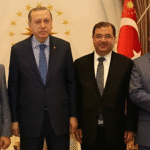
First Figure: Olivier Bonnassies
Born in 1966, Bonnassies claims he was once agnostic or irreligious before undergoing a spiritual awakening that led him to Christianity. He studied applied sciences and political science, then shifted to theology, earning a degree from a Catholic institute in Paris in 1994. Since then, his life has been dedicated to religious work, specifically focused on Jesus and the Virgin Mary.
He founded the association Marie de Nazareth based in Nazareth, Israel. The group sends out daily spiritual messages titled “A Minute with Mary”. In 2013, he launched the global Christian media platform Aleteia, available in several languages. He has also been active on YouTube for over 20 years, primarily producing Christian missionary content.
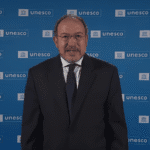
Second Figure: Michel-Yves Bolloré
Born in 1945, Bolloré is a devout Catholic and a member of a powerful industrial family. After financial issues led to the sale of his father’s company, Michel-Yves and his brother Vincent acquired it back at a symbolic price. He managed it from 1981 to 1990, eventually building his own economic empire.
In 1990, he founded a large company named Essor. He made headlines with a controversial deal in 2003 when he bought a nuclear parts factory for a very low price and sold it three years later for €170 million. Bolloré is one of France’s wealthiest men and owns numerous schools and companies throughout Europe. He’s not just wealthy—he’s influential, powerful, and deeply religious.
Third Figure: Vincent Bolloré
Though not officially linked to the book, Vincent—Michel-Yves’s brother—is worth mentioning. A billionaire media mogul, he previously ran Canal+ and ranks among France’s top 15 richest individuals. Like his brother, he is a devout Catholic.
Even without concrete evidence of his involvement in promoting the book, it’s logical to assume he supported his brother’s efforts—especially given his vast media reach.
How Did They Connect?
In a YouTube interview, Olivier recounts how they met. He was giving a presentation in Paris about the Virgin Mary and invited wealthy individuals to support his project in Nazareth. Michel-Yves attended the event, praised the presentation, and promised to donate the proceeds from the sale of a major company he was about to sell—which he did.
Three years later, he sold the company for €170 million and wrote a substantial check to support Olivier’s project. Their partnership grew, leading to the launch of Aleteia, which Michel-Yves financed.
In 2013, Olivier posted a video aiming to “prove God’s existence scientifically,” after a schoolteacher challenged his son’s beliefs. The son encouraged the teacher to talk to his father. Olivier made the video for that teacher, and when Michel-Yves saw it, he was impressed. They met again and decided to create something bigger: the book God, Science, and the Evidence.
The Real Motive: Evangelism and Commercial Gain
The book is not a neutral scientific inquiry; it is a missionary project disguised as science. Funded by a devout billionaire and written by a seasoned Christian missionary, it was marketed to give the illusion of objectivity.
It became a hit overnight—not because it contained groundbreaking science—but because it was crafted and promoted using the sacred triangle: idea, wealth, and media. The goal? To promote Christianity under the guise of scientific discourse, and possibly to reap commercial rewards.
Final Thoughts
The book’s popularity does not make its claims true. It doesn’t confirm Christianity, nor does it prove the existence of God. What it proves is how well-organized marketing and missionary networks can manufacture intellectual legitimacy. Sadly, many people—especially in our region—were deceived into believing the book is scientific and unbiased, when in fact it is neither.